By: SKIMS
Introduction
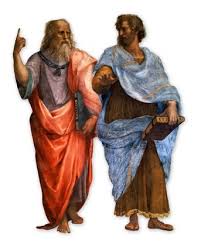
The human person is very complex and this is a very obvious axiom. The aforementioned statement is true in all fields of study. But as to why he is complex and the implications of such attribute is worth studying. This essay is briefly going to look at what two of the major pillars of Ancient Greek Philosophy considered the nature of man to be and the implications that can be drawn from their concepts.
Aristotelian Concept of Life Forms or Levels of Life
Aristotle’s concept of the nature of man can be viewed from the point of view that man is a living being which implies that he has life. This consequently leads us to the concept of life. Man’s life comes from having a soul which according to Aristotle is also the essential part (the essence) of his makeup (body and soul). The soul of man compared to the other life forms which according to the Greek philosopher is the highest level of life. Aristotle in his taxonomy classifies all life forms into three levels. The first level is characterized by the attributes of nutrition, growth, and reproduction and this level of life is referred to as vegetative life. The second is characterized by nutrition, growth, reproduction, and sensitivity. The final one which he referred to as the rational level of life is characterized by both sensitivity and rationality. For the Greek Philosopher, the attribute of man as rational is what sets man aside as the being with the highest life form. Considering the assertion that man is superior to all forms of life due to the higher level of his life which endows him with self-consciousness; an element of his rational principle of knowledge called intellect, he is susceptible to the misconception that he is omniscient and omnipotent in all his endeavors and while that might seem quite a genuine morale it is rather specious. So why is man believing in his complacency of knowledge and might be questionable?
Plato and the World of Forms.
The question raised above is an avenue to explore, though briefly, an aspect of the epistemology of the Ancient Greek philosopher Plato which is commonly known as the world of forms. According to Plato all that appears in man’s current reality is an imperfect depiction of their corresponding perfect object in an eternal reality which he termed the world of forms. He postulates that the more one gets closer to that world of forms, the more the person is endowed with intelligence (noesis). He will not give a road map as to how to attain true knowledge in the world of forms but states that the body or the external senses are the grilles between the soul and the world of forms. Augustine, a pre-medieval philosopher re-echoing Plato’s theory on the World of Forms, claimed that the five external senses, though for Plato is very far from reaching the realms of true knowledge, are capable of knowing but in an impaired way because they are far from the world of true knowledge which is the World of forms. These concepts of Plato and Aristotle may seem unrelated in many senses, but man may thrive well in their sum reconciliation.
To be continued…..