By: Don Pax
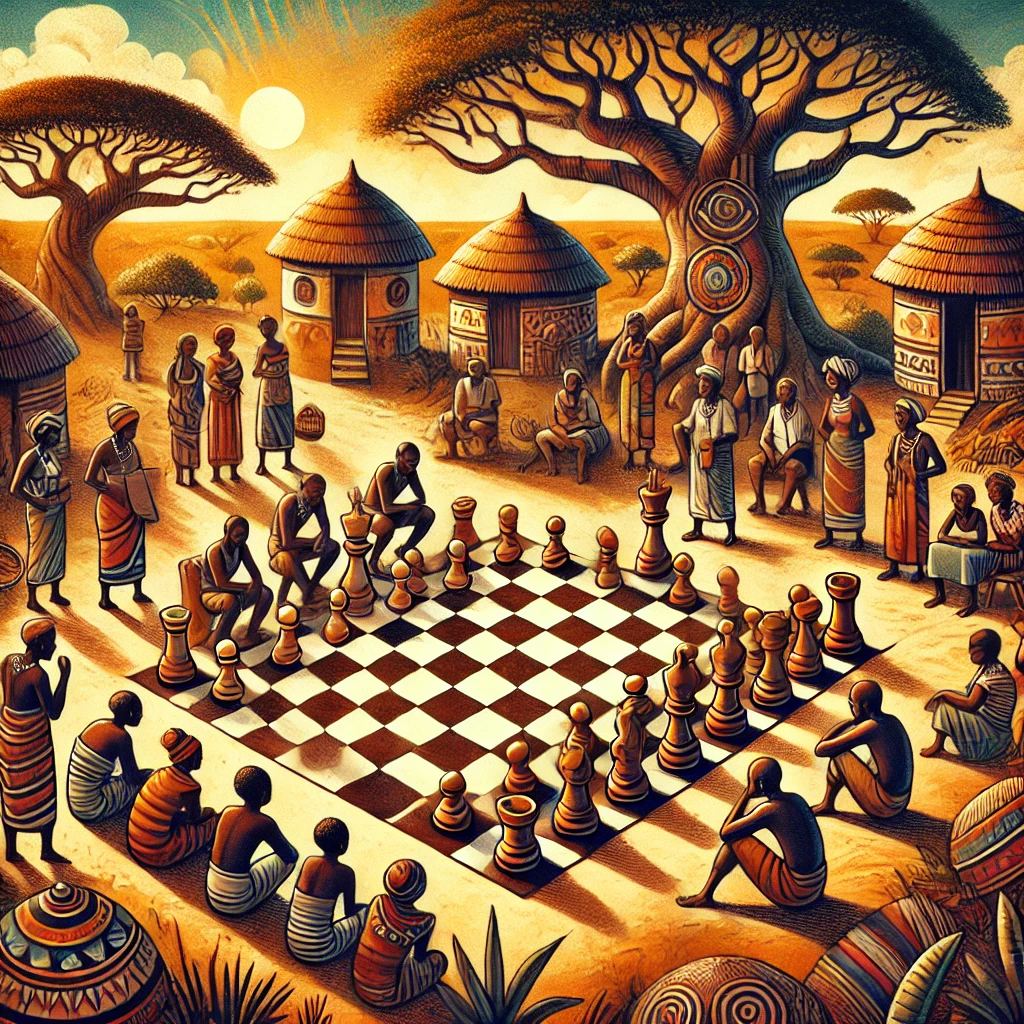
 In the diverse landscape of Africa, where community stands as the bedrock of society, we find an insightful parallel in the ancient game of chess. This strategic board game, though not indigenous to the continent, offers a profound metaphor for understanding the complex diversity of African social structures. As we explore this analogy, we will discover how each chess piece represents different roles within our communities, reflecting the unity in diversity that characterizes the African experience.
Understanding Chess: A Brief Introduction
Before we delve into the parallel, let us briefly explain “chess” for those unfamiliar with the game. Chess is played on a board of 64 squares with two players, each commanding an army of 16 pieces: one king, one queen, two rooks, two knights, two bishops, and eight pawns. Each piece moves differently and has a unique role in the game’s strategy. The objective is to checkmate the opponent’s king, but success requires the coordinated effort of all pieces.
The Chessboard: Our Continental Tapestry
Imagine the chessboard as a microcosm of our vast continent. Each square represents a different facet of African life from the bustling markets of Lagos to the serene savannas of the Serengeti, from the historic universities of Cairo to the diamond mines of Botswana. Just as a chess player must consider the whole board, we also in this contest, must view our communities as interconnected parts of a greater whole.
The Pieces: Diverse Roles in Our Pan-African Community
Pawns: The Heartbeat of Africa
In chess, pawns are the most numerous pieces, underestimated yet crucial for victory. In our African context, they represent the majority of the farmers, traders, artisans, and youth who form the backbone of our societies.
Example: In the vibrant Makola Market of Accra (Ghana), women like Auntie Akos run small businesses selling everything from fresh produce to textiles. These market women, locally known as “Market Queens,” play a crucial role in Ghana’s informal economy. Their daily efforts, much like the steady advance of pawns, drive the local economy and preserve cultural traditions.
Contemporary relevance
As Africa faces rapid urbanization, these “pawns” are adapting. In Nairobi (Kenya), young entrepreneurs are creating innovative start-ups, moving the continent forward one step at a time in this digital age.
Knights: Our Innovative problem solvers
Knights in chess move in a L-shape, bypassing obstacles. They embody Africa’s innovators and out-of-the-box thinkers who navigate our unique challenges with creativity.
Example: In Uganda, engineer Bruhan Namanya developed a mobile app called “Agro Assistant” that helps farmers detect crop diseases using artificial intelligence, showcasing the knight’s ability to find unexpected solutions.
Expert insight: Dr. Ndubuisi Ekekwe founder of the African Institution of Technology notes, “Africa’s future lies in harnessing its innovative spirit to solve local problems with global relevance.”