 Education stands as the bedrock of societal advancement, a catalyst for economic growth, and a cornerstone of human development. Nations that prioritize robust educational systems often witness transformative infrastructural and societal progress, while those that neglect it grapple with stagnation. Ghana, like many developing countries, faces a critical paradox: its education system, designed to empower citizens and solve national challenges, has instead become a subtle contributor to systemic inefficiencies. To understand this disconnect, we must examine the core purpose of education and how Ghana’s system falls short of its ideals.
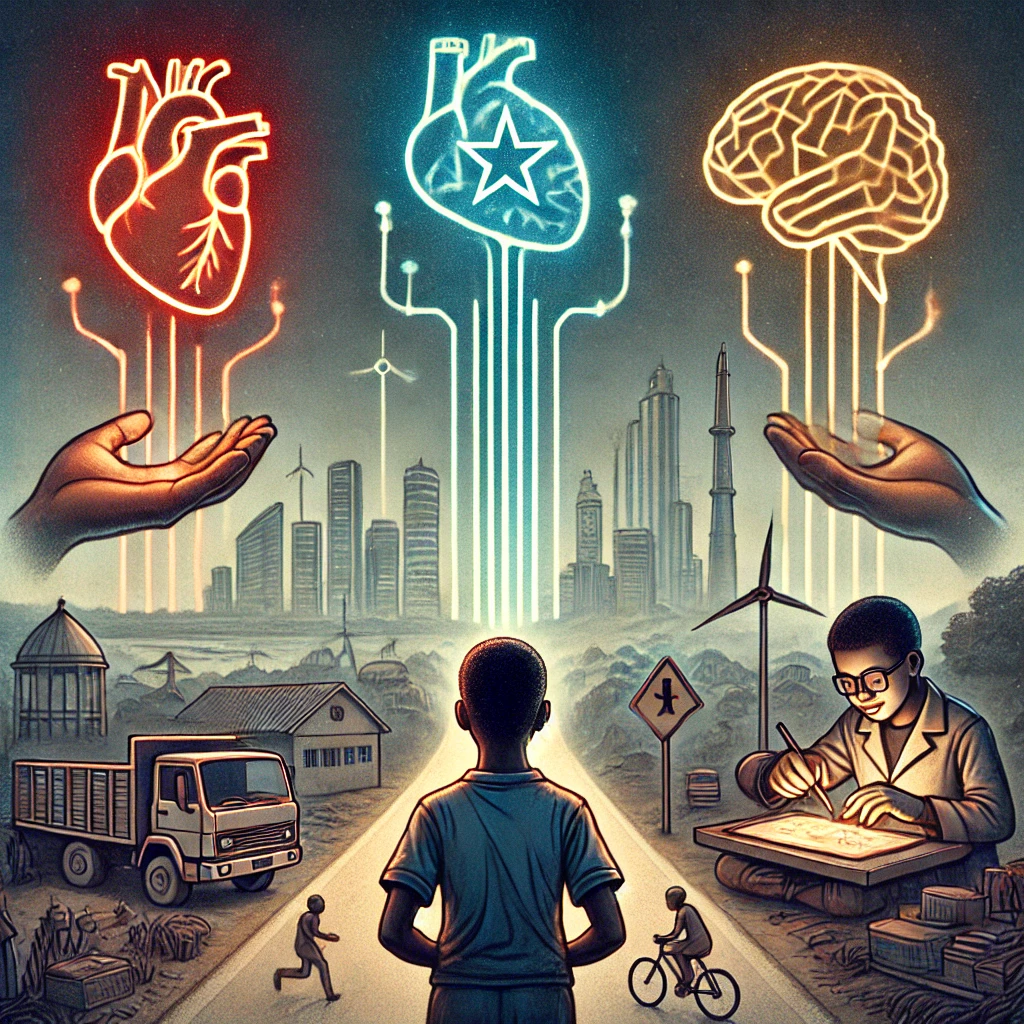
At its essence, education transcends the mere transfer of knowledge. It is a holistic process that trains individuals in three dimensions: the heart, the mind, and the hands. First, it cultivates the heart by instilling empathy, integrity, and a sense of civic duty. Second, it sharpens the mind through critical thinking and problem-solving skills. Third, it equips the hands with practical expertise to drive productivity and innovation. Together, these pillars aim to uplift individuals and societies, fostering environments where collective well-being thrives.
Ghana’s educational framework, however, struggles to fulfill this triad of objectives.  A glaring failure lies in its neglect of moral and ethical training—the education of the heart. While schools produce graduates with technical qualifications, many lack the ethical compass to resist corruption. The pursuit of personal gain often overshadows national interest, as seen in rampant graft within public institutions. This moral deficit underscores a systemic oversight: education that does not nurture a love for country or commitment to communal progress breeds leaders who prioritize self over society.
Equally concerning is the system’s failure to train the mind. Ghanaian classrooms, particularly at the tertiary level, emphasize rote memorization over analytical reasoning. Lecturers frequently assess students through theoretical regurgitation rather than practical problem-solving. This pedagogical approach stifles creativity, leaving graduates unprepared to address real-world challenges. For instance, engineering students may master textbook formulas but falter when tasked with designing solutions for local infrastructure issues. Such gaps highlight a disconnect between academic training and the cognitive agility needed in a dynamic world.
The third pillar—training the hands—faces similar shortcomings. Technical universities, originally established to impart vocational skills, now mirror traditional universities in their focus on theory. Workshops lie underutilized; apprenticeships are scarce. Graduates from these institutions often lack hands-on proficiency, rendering them ill-equipped for industries demanding technical expertise. This deficiency not only limits individual employability but also hinders national industrial growth, as the workforce remains misaligned with market needs.
The consequences of these failures are profound. Instead of producing problem-solvers, Ghana’s education system perpetuates a cycle of dependency. Graduates reliant on government employment, rather than entrepreneurial ventures, exemplify this trend. Moreover, the absence of ethical grounding sustains a culture where corruption thrives, undermining public trust and economic stability.
Reversing this trajectory demands urgent reforms. Policymakers must reorient curricula to emphasize ethics, critical thinking, and practical skills. Integrating community service into education could nurture civic responsibility, while industry partnerships with technical universities would bridge the gap between training and employment. Teachers, too, require retraining to adopt student-centered pedagogies that prioritize innovation over memorization.
In conclusion, education remains Ghana’s most potent tool for national transformation—but only if its system is recalibrated to fulfill its true purpose. By nurturing hearts that value integrity, minds that solve problems, and hands that master skills, Ghana can transform its classrooms into incubators of progress. The task is monumental, but the alternative—a future where education remains a problem in disguise—is untenable. The time for holistic reform is now.
Edited from the archives